SENSUALITY by TÔLE-ACHE
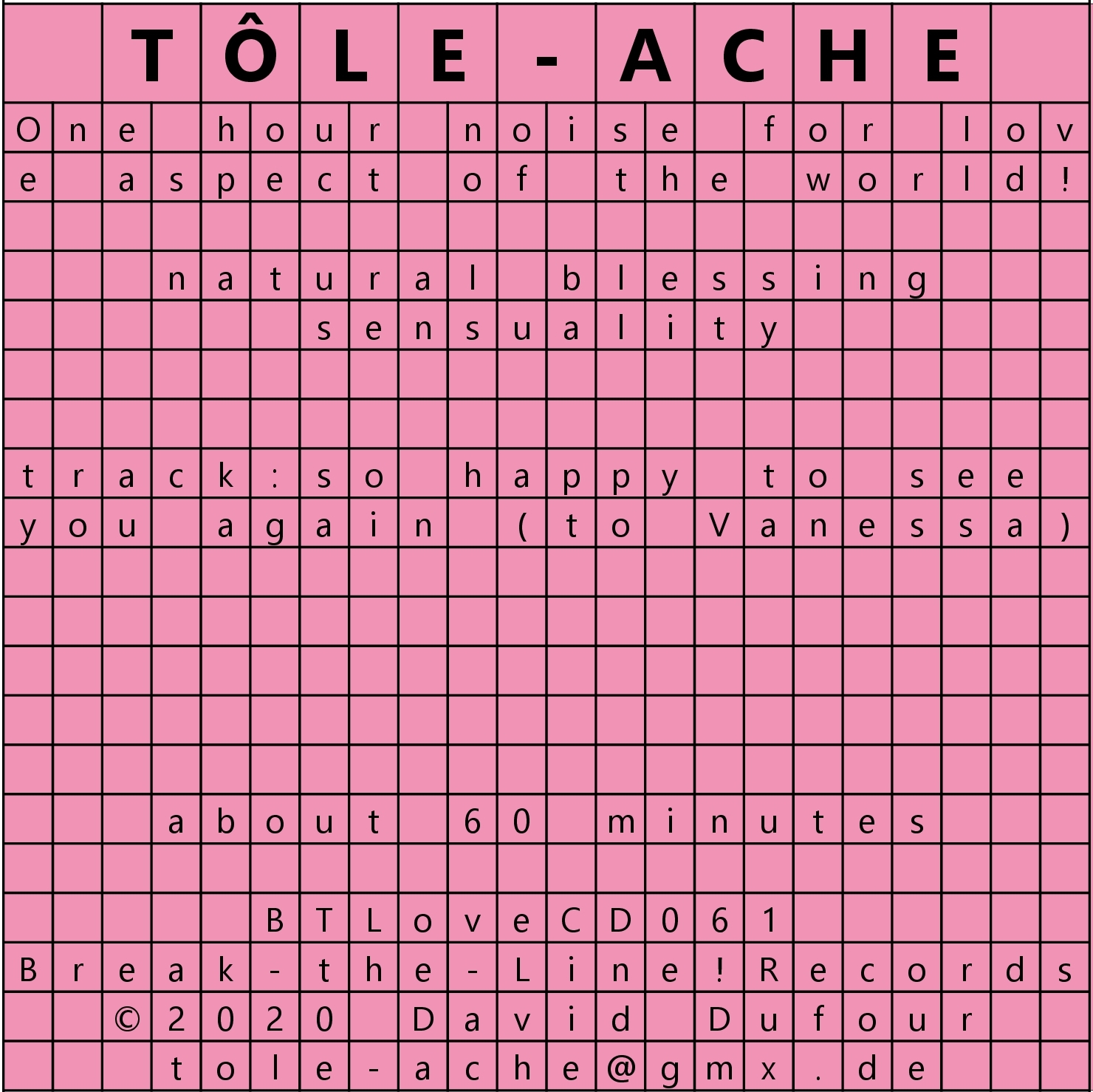
This is music of exasperation—an extreme form of Harsh Noise Wall that relies solely on white noise generators. It is repetitive and deliberately exasperating.
Tôle-Ache explores random sound effects and the psycho-acoustic impact of prolonged listening to sounds that either barely evolve or do not evolve at all.
At first, listening to Tôle-Ache may give the impression that the sounds remain entirely unchanged. However, even as I continuously adjust buttons or fine-tune synthesizers, these devices undergo numerous self-modifications. For instance, random oscillation phenomena occur when oscillators heat up, causing their fundamental frequency to shift gradually. This results in waveforms containing varying levels of harmonics. Often, I use input and output connections to create loops, linking several synthesizers in a chain and making them interdependent.
These methods directly influence the audio signal, generating unpredictable musical phenomena.
In most cases, the sounds evolve slowly over the course of a 60-minute track. However, unplanned effects can sometimes be rapid and surprising, or slow and oppressive.
The goal of these 60-minute compositions is to produce a hypnotic and psycho-acoustic effect for the listener. It is recommended to use headphones to amplify the psycho-acoustic experience.
It is fascinating to note that the brain—or "the cognitive ear"—can process a maximum of only 3 to 4 sounds simultaneously. While we may seem to perceive complex music in detail, the brain initially focuses on the overall soundscape before homing in on specific details. It alternates between segments, analyzing individual sound components to extract information about rhythm, tone, timbre, and the emergence or disappearance of new sounds.
The ear cannot register every sound concurrently. When listening to intricate music, the brain locks onto the most prominent sounds and disregards finer details, or vice versa. It often requires multiple replays to fully appreciate such music. With extended or repeated listening, new acoustic details—present from the start—may suddenly become noticeable. The ear shifts its attention to these subtleties as if they had just emerged.
A reference piece that illustrates this phenomenon is “Ragnarok Rune” by Boyd Rice. The 12-inch vinyl version is preferable to the mini-CD version, as the latter is significantly shorter and lacks the infinite loops of the former. The piece consists of three sound loops, each approximately 1.3 seconds long, depending on whether it is played at 33 or 45 rpm. The right and left channels differ entirely, creating tension within the acoustic experience. Remarkably, after more than an hour of listening—equivalent to about 1,980 repetitions of a single loop—new auditory details seem to emerge suddenly.
My work as Tôle-Ache draws on this phenomenon. I create one-hour compositions of seemingly static music. The noticeable changes—such as rhythm, frequency, and tone—are first-level modifications. However, subtler details only reveal themselves during prolonged and attentive listening.
Popular and classical music often combine rhythm, melody, and lyrics, with changes that are easily perceptible. By contrast, modern and avant-garde pieces—such as those by composers Terry Riley, Philip Glass, and Steve Reich—offer minimal rhythmic change, tonal constancy, and little or no melody. With a touch of humor, Philip Glass referred to his 1971 creation as “music with changing parts.”
Why do we, as a culture, expect music to be rhythmic or melodic? Without these elements, does it lose its musical quality? To me, even a sinusoidal signal at a fixed frequency qualifies as music. Just listen—it’s music, it’s a creation, a return to basics and simplicity.
What I call “non-organized noise music” or “noise music with unchanging parts” requires patience and time to be truly appreciated.
One final thought: immersing oneself in a one-hour bath of hypnotic sounds can evoke unpleasant, distressing, and oppressive feelings—emotions such as discomfort, unease, or disgust. The musical atmosphere is intentionally challenging. I deliberately choose from around 250 themes of nuisance, mischief, crime, and oppression, drawn from the struggles of humanity, and transpose them into musical form.
Tracklist
| 1. | so happy to see you again (to Vanessa) (Part 1) | 30:00 |
| 2. | so happy to see you again (to Vanessa) (Part 2) | 30:02 |
Credits
©+℗ Break-The-Line! Records & David Dufour, 2025
License
All rights reserved.



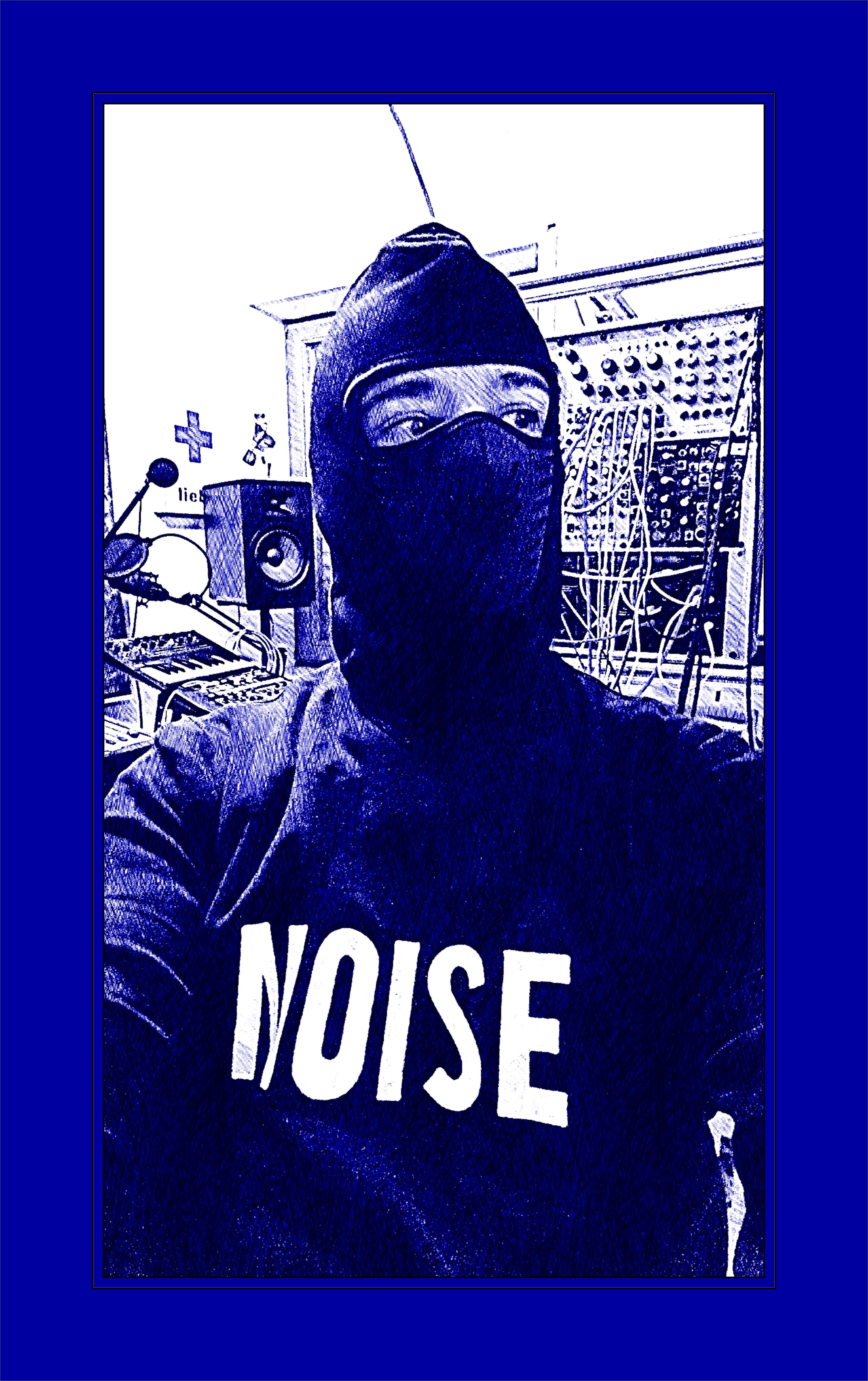
Exasperation music & HNW
Tôle-Ache presents work on exasperation music, random sound effects and the psycho-acoustic effects during prolonged listening while the sounds do not evolve or evolve just a little.
The first impression when listening to Tôle-Ache is to believe that the sounds do not change at all.